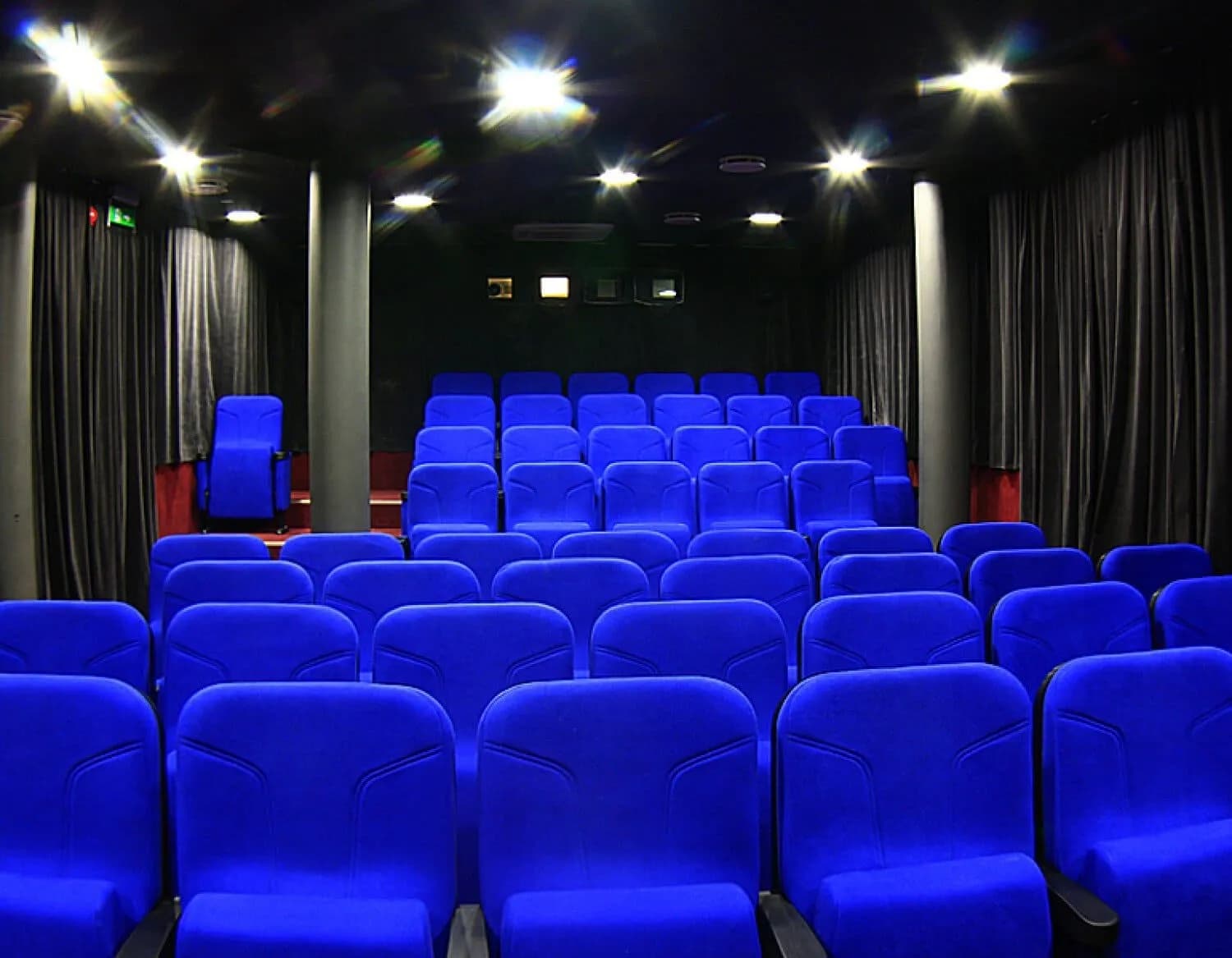
Some cinemas become landmarks because of their buildings; Awangarda became one because of the cultural life created inside it.
In the heart of Olsztyn's Old Town, among historic tenement houses, a small cinema called Awangarda built a reputation that extended far beyond its screen. Its story reaches back more than a century, but its importance lies as much in the community that gathered around it as in the age of the cinema itself.
The cinema was founded in 1910 as the "Luisen Theater". From 1911, it operated in a tenement house at 23 Stare Miasto Street, becoming part of the changing cultural landscape of Olsztyn.
By the time film enthusiast Konrad Lenkiewicz took over the cinema in 1990, together with Danuta Fedorczuk, the circumstances were far less certain. They created the Awangarda 2 Film Culture Centre, making it the first private cinema in Olsztyn and one of the first in Poland.
The early years were modest. The political and economic circumstances were uncertain, film repertoire was limited and the growing popularity of video was drawing audiences away from traditional cinemas.
Yet Awangarda developed an identity of its own.
A cinema where film became an event
Rather than treating cinema simply as a place to watch films, Awangarda became a meeting point for Olsztyn's cultural community. Its programme included ambitious, artistic and often controversial films, with a particular focus on Polish and European cinema.
The cinema hosted premieres of films including "Jurassic Park", "Dances with Wolves", "Batman", "The Piano", "Schindler's List", "The Priest" and "The Passion of the Christ". These occasions could extend beyond the screening itself, incorporating concerts, exhibitions and other artistic events.
The cinema also welcomed filmmakers and artists, among them Jerzy Stuhr, Radosław Piwowarski, Jan Jakub Kolski, Krzysztof Krauze with Joanna Kos-Krauze, Jacek Bławut, Janusz Kijowski, Jan Nowicki, Juliusz Machulski and Krzysztof Zalewski.
Its atmosphere became part of its appeal. A film café and flower-filled terrace helped establish Awangarda as a distinctive destination on Olsztyn's cultural map, attracting residents as well as visitors from elsewhere in Poland and abroad.
The cinema also became a setting in its own right. Film crews used the distinctive surroundings on numerous occasions, adding another layer to the building's connection with cinema.
Awangarda's commitment to independent film culture was reflected in its membership of the nationwide Network of Arthouse and Local Cinemas. In 2009, it joined Europa Cinemas, a European network bringing together arthouse cinemas across the continent.
When losing the building did not mean losing the idea
The most difficult chapter came in autumn 2011, when the lease on the premises at 23 Stare Miasto Street expired. Awangarda had to leave the building where its identity had developed over decades.
The response demonstrated how deeply the cinema had become embedded in the city. More than 3,000 people joined the "Save the Avant-Garde" Facebook page within a few days, while Olsztyn associations, including "Borussia" and "Święta Warmia", protested against the closure of a cinema with a century-long history.
The campaign could not keep Awangarda in its original premises. But the cinema itself continued.
A new home was created from scratch in the Polish Library, opposite the City Hall. The new venue was designed as an intimate and comfortable cinema, allowing Awangarda to continue its focus on ambitious films and the audience relationships that had defined it.
The New Horizons of Film Education project also continued there, maintaining the cinema's role beyond regular screenings.
That continuity is perhaps the most important part of Awangarda's history. The original building was significant, but the cinema's identity proved capable of moving with its audience.
Today, the name Awangarda carries the memory of the historic Old Town cinema while representing an ongoing commitment to independent film culture in Olsztyn. Its history demonstrates that cultural institutions are not defined solely by their walls. Sometimes their most enduring legacy is the community, ideas and conversations they leave behind.
Visitor Information
Cinema: Awangarda
Current location: Polish Library, opposite the City Hall, Olsztyn