A medieval castle, a scientist's calculations and centuries of regional culture meet under one roof in the heart of Olsztyn.
Museums often divide the past into subjects: art, archaeology, history, literature or everyday life. At the Museum of Warmia and Masuria in Olsztyn, those categories come together within a building that is itself part of the story.
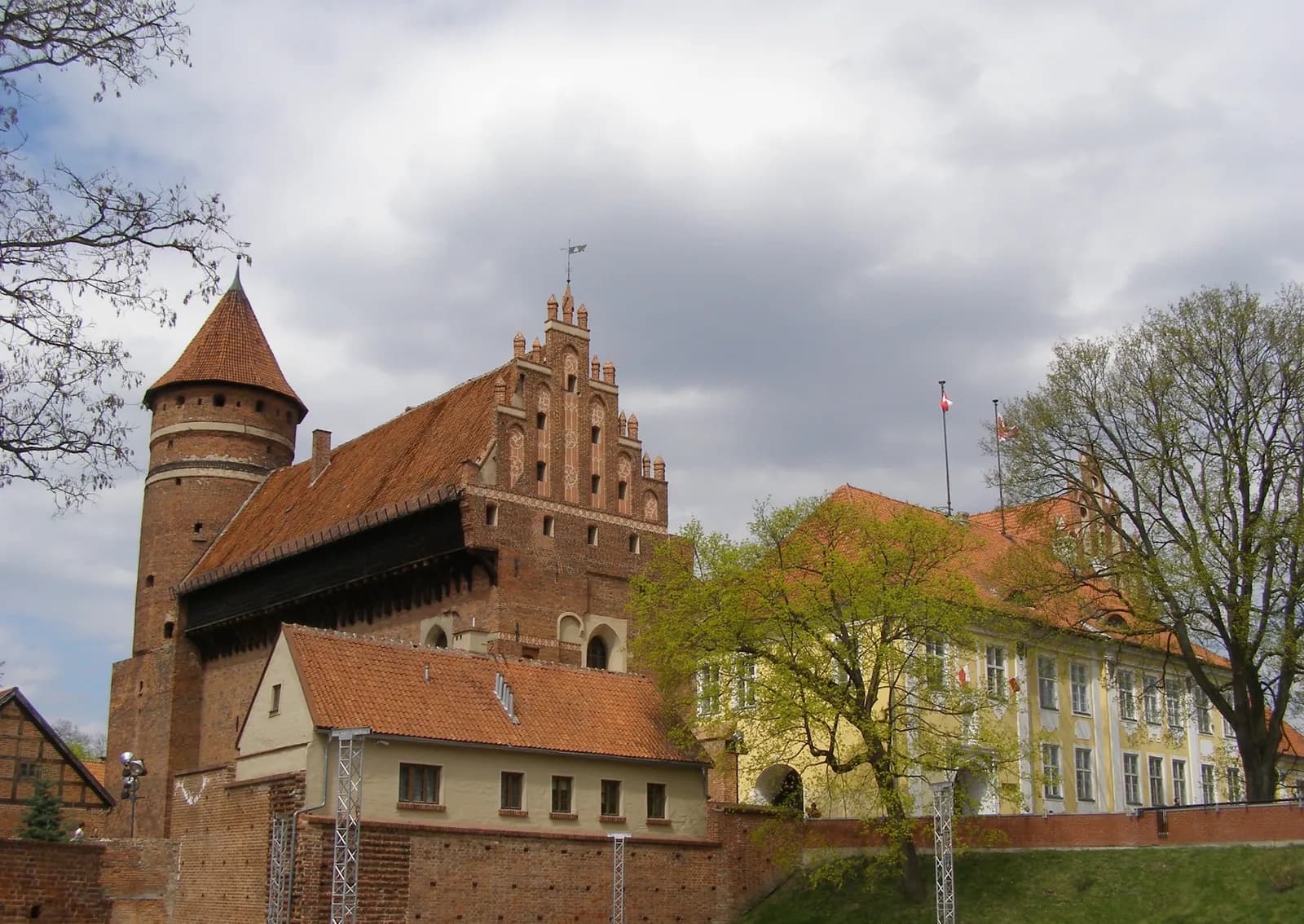
The institution was founded in 1945 and has its main seat in the fourteenth-century Gothic Warmia Chapter Castle. Built for the administrator of the Warmia Chapter's estates, the castle provides an unusually direct connection between the collections inside and the history of the region beyond its walls.
That relationship is particularly evident in the museum's connection with Nicolaus Copernicus. The astronomer served as administrator at the castle during two periods between 1516 and 1521. A surviving astronomical table drawn by Copernicus on a gallery wall remains one of the most distinctive traces of his work there. The museum's library also holds a medical incunabulum associated with his use.
The castle makes the collections part of the story
Copernicus is perhaps the best-known individual associated with the building, but the museum's purpose extends considerably beyond one historical figure.
Its collections cover archaeology, history and numismatics, ancient and modern art, artistic handicraft, literature and folk culture. Among the distinctive groups are Gothic sculpture, Warmian religious painting, Dutch portraiture, pewter and bell-founding products, and contemporary graphics.
That breadth matters because Warmia and Masuria cannot easily be reduced to a single historical narrative. The objects preserved by the museum offer different ways of approaching the region, from religious and artistic traditions to material culture and written records.
The library adds another dimension. Its holdings include old printed works, manuscripts and periodicals, alongside works connected with Copernicus and other aspects of the region's intellectual history. Among its special holdings is an incunabulum containing two medical works from the late fifteenth century that belonged to Copernicus's library.
The result is a museum where the significance of an object can depend as much on its context as on its appearance.
A collection that continues to connect past and present
The museum is not simply preserving an established group of historic objects. Its programme continues to reinterpret the region through exhibitions and new perspectives.
Its current exhibition programme includes the permanent exhibition Mikołaj Kopernik mieszkaniec zamku olsztyńskiego and temporary exhibitions exploring subjects ranging from regional folk traditions to historic museum collections and modern Polish art.
The museum has also developed a collection centred on Copernicus and the cosmos that grew from artistic competitions and plein-air projects organised around the 500th anniversary of the astronomer's birth in 1973. The collection includes paintings, graphics and sculpture by Polish artists, with a significant representation from the Olsztyn artistic community.
This gives the institution another useful perspective on regional heritage. The past is not only something to be conserved. It can also become material for new artistic interpretations and questions.
That approach helps explain why the museum remains relevant beyond the castle's historical associations. For residents, it provides a place where the cultural memory of Warmia and Masuria is collected and interpreted. For visitors, it offers a way into the region that goes beyond its landscapes and famous landmarks.
The setting is important, too. The museum does not ask visitors to imagine the castle's historical role from a modern gallery removed from its original context. The collections are encountered inside the Gothic building that forms part of the story itself.
Olsztyn's castle therefore works on two levels: as a historic monument and as a museum. Between its walls, a wall drawing connected with Copernicus, religious art, archaeological material, books, handicrafts and contemporary works belong to the same larger effort to understand a place through what its people have left behind.
For a region shaped by many centuries of cultural change, that may be the museum's most valuable role. It preserves individual objects, but brings them together so that they can tell a much larger story about Warmia and Masuria.
Visitor Information
Museum: Museum of Warmia and Masuria in Olsztyn
Main venue: Warmia Chapter Castle, ul. Zamkowa 2, 10-074 Olsztyn.
Current summer opening hours, 1 July–31 August 2026:
Monday: closed, internal work day
Tuesday: 10:00–17:00
Wednesday: 10:00–17:00
Thursday: 10:00–17:00
Friday: 11:00–18:00
Saturday: 11:00–18:00
Sunday: 10:00–17:00
Ticket office: closes at 30 minutes before the museum.
Opening hours vary seasonally, so visitors should check the museum's official website before travelling.