Tucked away just beyond Olsztyn's historic centre stands one of the city's oldest and least noticed landmarks. The Kaplica Jerozolimska, or Jerusalem Chapel of the Holy Cross, has quietly witnessed more than four centuries of local history, surviving wars, epidemics and changing borders.
Although small in scale, the chapel occupies an important place in Olsztyn's story. It reflects medieval traditions of pilgrimage, the city's early healthcare system and the enduring importance of faith in the everyday life of locals. For many visitors, it is easy to walk past without realising they are standing beside one of Warmia's most unusual historic buildings.
A Rare Reminder of Medieval Pilgrimage
The chapel takes its name from the medieval tradition of creating symbolic 'Jerusalem chapels' across Europe. At a time when only a small number of people could make the long and dangerous journey to the Holy Land, these chapels allowed worshippers to commemorate Christ's Passion closer to home.
The tradition was encouraged in Warmia by the Teutonic Order, whose members maintained close links with the Holy Land. Today, only two historic Jerusalem chapels survive in the region, making Olsztyn's chapel an exceptionally rare example of this once widespread form of devotion.
The building is first mentioned in written records in 1565, although historians believe it was built earlier, probably during the second half of the sixteenth century.
Standing Beyond the Medieval Walls
When the chapel was constructed, it stood outside Olsztyn's defensive walls on the Lower Suburb, beside one of the main routes leading into the town.
Its location was no accident.
Nearby stood the Hospital of St George, where people suffering from infectious diseases, including leprosy, were cared for away from the densely populated town centre. The surrounding cemetery became the resting place for many victims of plague and other epidemics, making the chapel a place of prayer, remembrance, and comfort during some of the city's darkest periods.
Historical records also suggest that prisoners sentenced to death stopped at the chapel to receive their final prayers before being led to the gallows outside the town.
A Chapel Shaped by the Centuries
Like much of historic Olsztyn, the chapel has evolved.
A recorded renovation took place in 1609, while a major Baroque rebuilding in 1775 gave the building much of its present appearance. Later restoration work followed in the early twentieth century after the East Prussian plebiscite, with further conservation projects carried out during the 1970s and again in 2008 and 2009.
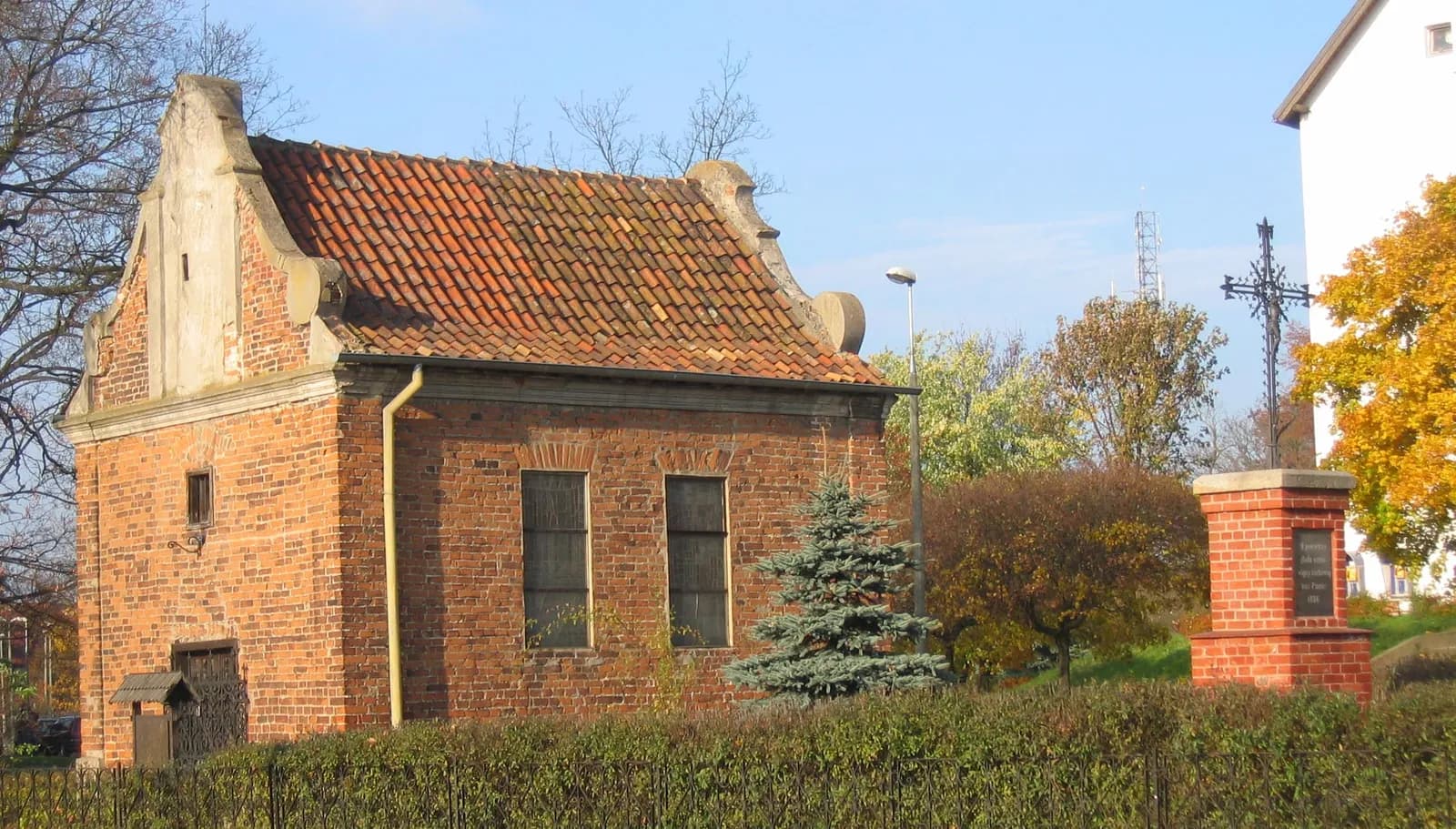
Despite these changes, the chapel has retained its modest character. Its simple brick construction, steep roof and elegant Baroque gables remain a distinctive feature of this quiet corner of the city.
Home to an Exceptional Gothic Masterpiece
Inside the chapel is one of Olsztyn's greatest artistic treasures.
Its late Gothic Crucifixion Group, created around 1510, is actually older than the building that now houses it. The remarkable sculpture depicts Christ on the Cross alongside the two thieves and is regarded by art historians as one of the finest surviving examples of late Gothic religious sculpture in Warmia.
The work is believed to have originated from the artistic circle of Königsberg, reflecting the close cultural links that once connected towns across the region.
The chapel also contains several historic paintings dating from the seventeenth and eighteenth centuries, including depictions of Christ beneath the Cross, the Virgin and Child, and the Lady of Sorrows.
Remembering the Victims of Cholera
Outside the chapel stands a stone cross commemorating those who died during the cholera epidemic of 1866.
Originally located elsewhere in Olsztyn, the monument was later moved to the chapel grounds during conservation work. It serves as a solemn reminder that disease shaped the city's history long before the modern era and that this small chapel remained closely connected with the care and remembrance of those affected.
A Living Place of Worship
The Kaplica Jerozolimska is not simply a historic monument.
Since the 1960s it has served as the pastoral centre for Olsztyn's deaf Catholic community, and regular services continue to be held there today under the care of St James' Parish.
Although the interior is generally only accessible during services or special occasions, the chapel remains one of the city's most significant religious buildings and an important part of Olsztyn's cultural heritage.
For those exploring beyond the Old Town's better-known attractions, it offers a quieter encounter with the city's past, revealing centuries of history in a building that has stood watch over Olsztyn for more than 450 years.
image source: Rlelusz, Public Domain